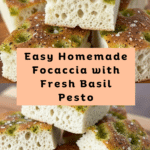
Easy Homemade Focaccia with Pesto Recipe
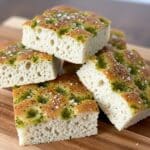
This easy homemade focaccia with pesto recipe combines traditional Italian flatbread with a vibrant, fresh basil pesto topping. Featuring a no-knead, high-hydration dough that yields a pillowy soft interior with a crispy golden crust, this focaccia is perfect as an appetizer, sandwich base, or accompaniment to soups and salads. The homemade pesto is made from fresh basil, pine nuts, Parmesan, garlic, and quality extra virgin olive oil, adding herbaceous and nutty flavors that perfectly complement the bread. Minimal equipment is required, making this rustic Italian favorite accessible for home bakers.
- Prep Time: 20 minutes
- Cook Time: 27 minutes
- Total Time: 2 hours 10 minutes
- Yield: 12 servings 1x
- Category: Bread
- Method: Baking
- Cuisine: Italian
- Diet: Vegetarian
Ingredients
Scale
For the Dough
- 4 cups all-purpose flour
- 2 teaspoons instant yeast
- 2 teaspoons salt
- 1 3/4 cups warm water (around 110°F)
- 1/4 cup extra virgin olive oil (plus 3–4 tablespoons for oiling and drizzling)
For the Pesto Topping
- 2 cups fresh basil leaves, packed
- 1/2 cup freshly grated Parmesan cheese
- 1/3 cup pine nuts (toasted)
- 3 cloves garlic, peeled
- 1/2 cup extra virgin olive oil
- 1/4 teaspoon salt
- 1/8 teaspoon freshly ground black pepper
- Optional: 2 tablespoons fresh lemon juice
For Garnish
- Coarse sea salt
- Fresh rosemary (optional)
Instructions
- Prepare the Dough: In a large mixing bowl, whisk together 4 cups of all-purpose flour, 2 teaspoons instant yeast, and 2 teaspoons salt. Add 1 ¾ cups warm water and ¼ cup olive oil, mixing with a wooden spoon or spatula until all flour is hydrated and a sticky, shaggy dough forms. No kneading is required.
- First Rise: Drizzle 1-2 tablespoons olive oil over the dough, turning to coat. Cover the bowl with plastic wrap or a damp towel and let it rise in a warm draft-free spot for 60-90 minutes until doubled in size and bubbly.
- Shape the Focaccia: Oil a 9×13-inch baking pan with 2-3 tablespoons olive oil. Transfer the dough gently to the pan, stretching it toward the edges without deflating the air bubbles. It’s okay if it doesn’t reach corners immediately.
- Second Rise: Let the dough rest uncovered in the pan for 20-30 minutes while preheating the oven to 425°F. After resting, drizzle 1 tablespoon olive oil over the top and create dimples using your fingertips spaced about 1 inch apart, pressing almost to the pan bottom without tearing.
- Add Seasoning: Sprinkle the dough with coarse sea salt and optionally fresh rosemary. This enhances the classic focaccia texture and flavor.
- Bake the Focaccia: Bake dimpled dough in the oven for about 20 minutes until light golden and edges begin to crisp.
- Prepare Pesto: While baking, place basil leaves, toasted pine nuts, garlic, Parmesan, salt, pepper, and lemon juice (if using) in a food processor. Pulse while slowly drizzling in ½ cup olive oil until smooth and vibrant.
- Add Pesto Topping: Remove the focaccia from the oven and spread ½ cup of fresh pesto evenly over the hot surface. For more layers, you can spread half the pesto before baking and the rest after baking.
- Finish Baking: Return the pesto-topped focaccia to the oven for another 5-7 minutes until edges are golden brown and the center is firm.
- Cool and Serve: Remove from oven, brush edges with extra olive oil for shine, cool in the pan for 5 minutes, then transfer to a wire rack for 10 minutes before slicing.
Notes
- Use high-quality extra virgin olive oil for best flavor throughout dough and pesto.
- Keep dough wet and sticky for authentic focaccia texture, avoid adding extra flour.
- Proper dimpling is essential to create oil pockets and texture.
- Control warm room temperature (75-78°F) for optimal dough fermentation.
- Both dough and pesto can be prepared a day ahead to develop flavor.
- Focaccia stores well at room temperature wrapped in a kitchen towel for 2 days or refrigerated in airtight container up to 5 days.
- Dough and baked focaccia freeze well; thaw and reheat as needed.
- Reheat focaccia in 350°F oven for 5-7 minutes to restore crispness.
- Gluten-free version can be made by substituting flour and adding psyllium husk powder.
Keywords: focaccia, pesto, Italian bread, homemade bread, basil pesto, no-knead focaccia, Italian cuisine